
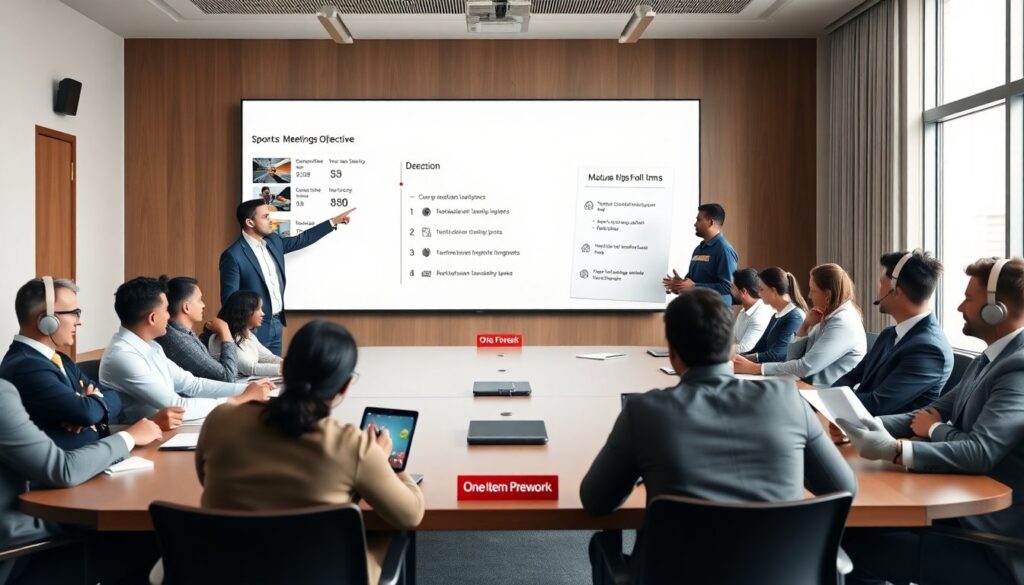
Advanced analytics redzonegross lions game shows coaches and captains how to run efficient, result-oriented gatherings. The guide sets clear meeting goals, limits meeting time, and fixes a regular cadence. It gives simple steps that staff and players can follow. The approach keeps focus on preparation, roles, and measurable outcomes.
Key Takeaways
- Successful sports team meetings depend on setting a clear purpose, defining outcomes, and maintaining a regular cadence to keep everyone aligned and on task.
- A focused, time-boxed agenda prioritizes key items and limits meeting duration, ensuring meetings start and end on time with actionable next steps.
- Assign specific roles and prework to attendees, such as note-taking and bringing relevant data, to maximize meeting efficiency and decision-making.
- Cultivate a high-performance meeting culture by encouraging brevity, direct feedback, punctuality, and rotating responsibilities among players.
- Use quick, relevant icebreakers and interactive tools to boost engagement while keeping the meeting tightly focused on performance goals.
- End meetings with clear, assigned tasks and deadlines, track progress openly, and conduct follow-ups to ensure accountability and measurable outcomes.
Define Clear Purpose, Outcomes, And Meeting Cadence
Coaches state the meeting purpose at the start. They name one or two outcomes for each meeting. Teams set a repeatable cadence: daily, weekly, or pre-game. The coach lists who must attend and why. They pick metrics that show progress. The meeting length stays fixed so the team values time. Players know when to expect information and when to act. The RedZoneGross model ties each meeting to a single decision or task to reduce drift and increase follow-through. Teams review outcomes briefly at the next meeting.
Design A Focused, Time‑Boxed Agenda That Drives Performance
The coach prepares a short agenda before the meeting. They assign time limits to each item. The agenda lists priority items first and reports last. Speakers stick to facts and next steps. The meeting starts on time and ends on time. The coach removes low-value items or moves them offline. Teams use templates for common meeting types: practice review, opponent scouting, or injury updates. The coach shares the agenda 24 hours before the meeting. This practice keeps focus and raises the chance that players leave with clear tasks.
Assign Roles, Logistics, And Prework To Maximize Efficiency
The coach assigns roles before the meeting. Someone takes notes. Someone tracks time. A captain leads player questions. The coach lists required prework and gives clear deadlines. Players bring specific items: video clips, stats, or medical updates. The meeting room, video setup, and devices stay ready. The coach confirms logistics the day before. They remove distractions like phones during key segments. RedZoneGross suggests a one-item prework rule: each attendee brings one data point and one proposed action. This rule reduces noise and speeds decisions.
Build Engagement And A High‑Performance Meeting Culture
The coach builds a culture that values short, useful meetings. They model brevity and direct feedback. Players get credit for clear contributions. The coach rewards punctuality and preparation. They ask open, concrete questions that require factual answers. The team practices quick decision drills in meetings so players get comfortable with pace. Coaches rotate small responsibilities so players learn meeting skills. The RedZoneGross approach keeps the culture focused on results, not on talking time. Teams hold periodic reviews of meeting value and adjust cadence or format as needed.
Use Quick Icebreakers And Interactive Tools To Boost Buy‑In
Coaches start with a fast, relevant icebreaker. They pick one that ties to performance: one win lesson or one correction. The coach uses interactive tools like shared screens, live polls, or quick whiteboard sketches. Players answer one quick poll to show alignment. The coach keeps interactions short and purposeful. Teams avoid long games or off-topic talk. RedZoneGross recommends 60 seconds max for icebreakers. The coach follows the icebreaker with the meeting purpose to keep energy aligned with the agenda.
Manage Conflict, Decisions, And Inclusive Input During Meetings
The coach states decision rules up front. They name who makes final calls and who advises. The coach invites input from all relevant players. They manage conflict by asking clarifying questions and returning to data. The coach records dissenting views and the reason for the final decision. Teams use a simple decision log to track who agreed and why. RedZoneGross advises a 60-second debate rule for non-critical issues. This rule keeps meetings moving and preserves trust when views differ.
Action‑Oriented Follow‑Up: Accountability, Tasks, And Next Steps
The coach ends each meeting with clear tasks and owners. They state the deadline for each task. The note-taker lists tasks in a shared location. Players confirm acceptance of tasks aloud. The coach schedules short check-ins for critical items. They use a simple tracker to show task status at the next meeting. RedZoneGross ties each task to a measurable outcome so the team sees progress. The coach reviews missed tasks and adjusts support or deadlines. This follow-up closes the loop and raises meeting impact.