
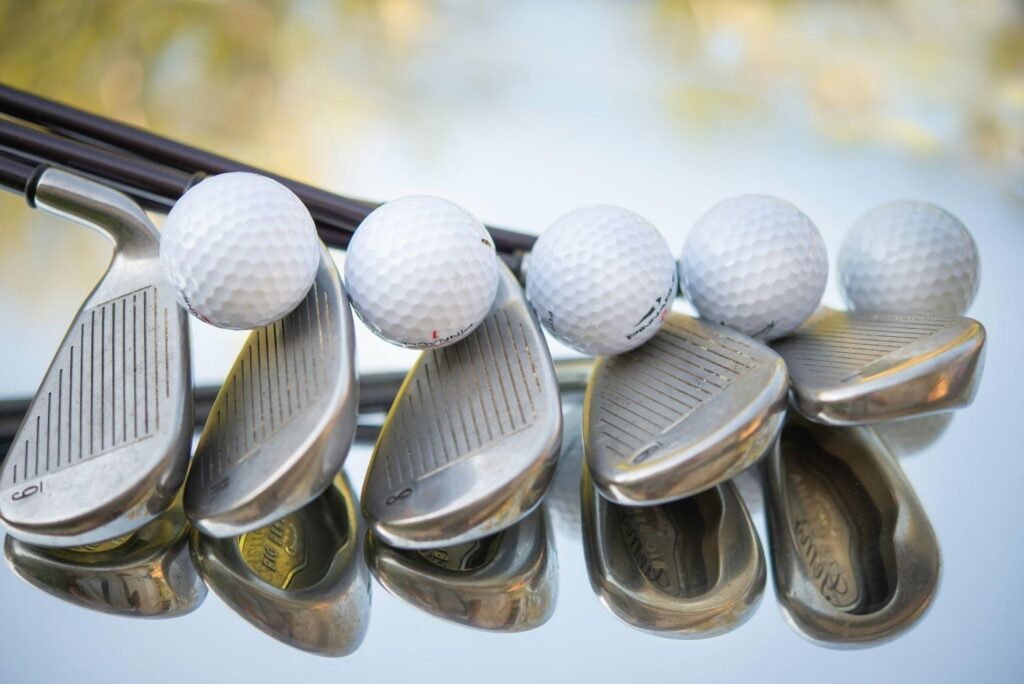
Most golfers start by buying clubs without thinking, and later on, they find out how their lives would have been different had they made different decisions. It might be comfortable to walk the course with spikeless golf shoes, but all equipment decisions affect the game’s development. Choosing equipment that fits your ability, pace, and playing style contributes to gradual progress and more enjoyment every time you start a round.
Understanding Club Types and Their Purpose
Clubs do much more than hit a ball. Every one of them has a distinct role based on loft, shaft flex, and head design. Forgiving cavity-back irons can often be beneficial for beginners, as they help them minimise the impact of minor mishits. Taller players may require longer lungs, and players with slower swing speeds are likely to select a lighter flex. Competent golfers might lean toward small blades or multi-material models that deliver accuracy. A correspondence of these features to individual technique is the guarantee of the free flow of development and a reduction in frustrating situations.
Choosing Woods and Hybrids Wisely
Long shots demand equipment that can deliver distance without sacrificing control. Drivers are available in various lofts, shapes, and face technologies. A golfer who struggles to maintain consistent contact could seek higher-lofted clubs to increase launch. In contrast, players with confidence can consider lower-spin options to gain greater carry. The hybrids can also serve as valuable alternatives to long irons and help the ball fly more easily out of the rough or fairway. These clubs may be chosen based on their comfort when practising the swings and, hence, provide more dependable performance on the course.
Selecting Irons That Match Your Current Ability
The iron set is made a primary element in approach shots. High-handicap golfers tend to perform well with irons that feature wider soles and more spacious sweet spots to help them gain stability. Medical equipment vendors may want to have sets that combine forgiveness and workability. Advanced players usually want models that enable them to control ball movement and mould shots in a more premeditated fashion. It is also essential to consider the distance between each iron to prevent awkward yardage intersections in the future.
Finding the Right Putter Style
Putting entails a combination of sense, balance, and aesthetics. Blade models are more appropriate for people inclined toward the traditional, lightweight shape, whereas mallets are more stable and have greater moment of inertia. The length is also a factor in posture and stroke mechanics, so it is essential to select a putter that helps support natural posture. The various head shapes and alignment features are tested to determine what builds confidence in the green.
Golf Ball Construction and Performance
Golf balls are subtly differentiated, which has a significant impact on performance. The softer models usually enhance the feel in and around greens, and these are attractive to touch-conscious people. Harder versions give a greater range to the quicker swinging players. The use of multi-layer constructions also achieves the various spin rates experienced with different clubs. Correct ball type to style of play insulates consistency on drives, approaches and putting.
Footwear That Supports Movement
Good shoes improve stability during the round. Spiked shoes provide extra traction, whereas spikeless shoes support a looser walk. Regular players on hard surfaces may use cushioned soles to reduce fatigue. Fit is critical, since golfers change their weight during the swing. A tight but loose shoe maintains balance and minimises the risk of slipping.

Accessories That Improve Everyday Play
Bags, towels, range gear, and gloves also contribute to a round that many people may not realise. A properly packed bag prevents clubs from shaking together and allows for finding necessary items quickly. Gloves are worn to cover the hands when the play lasts long and to ensure a consistent grip pressure. Grooves on towels are clean, and spin is consistent. Other accessories, like light umbrellas or caps that fit perfectly, are also very beneficial in fluctuating weather.
Choosing Equipment for Your Skill Level
A golfer’s needs vary with ability. When forgiving designs are developed to match the emerging technique, new players tend to grow faster. Amateur golfers can take a step forward by exploring the various adjustable or specialised drivers and wedges. More advanced players consider spin profiles, launch angles, and minute design variations across various club categories. Periodic review of the gear will keep the set current and relevant to personal objectives.
Bringing Everything Into Focus
Considerate equipment choice affects each aspect of the course. The design of the clubs, the level of comfort in their shoes, and the selection of accessories all determine how a golfer faces new challenges with unwavering confidence. Making good decisions leads to sustained growth and makes the game a better experience, either in social or competitive ways.