
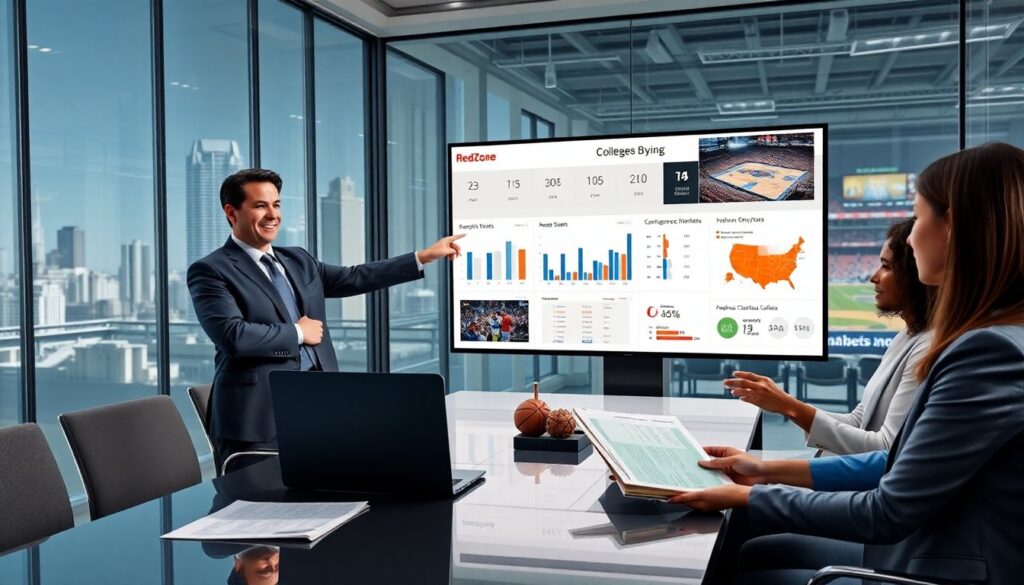
The report opens with a clear view of college basketball redzonegross buying trends and their effect on rights and ad inventory. Marketers read this summary to assess spend shifts, audience reach, and inventory types. The data shows where buyers place gross dollars and how rights holders price packages. The article lists actionable steps for planning, buying, and measuring gross inventory.
Key Takeaways
- College basketball redzonegross buying involves bulk ad purchases across live games and highlights, securing predictable reach on conference networks and digital platforms.
- From 2022 to 2026, advertisers shifted from linear broadcast to cross-platform and programmatic gross buys to maximize audience targeting and measurement.
- Gross buys occur in linear broadcast, streaming, and programmatic channels, with rights holders balancing inventory to protect TV value and scale digital delivery.
- Conference and syndication packages bundle inventory with guaranteed impressions and blackout rules, helping buyers optimize market reach and reporting simplicity.
- Streaming platforms use dynamic ad insertion and fixed inventory blocks, enabling targeted gross buys verified by third-party measurement for impressions and viewability.
- Advertisers should plan budgets across channels, negotiate clear makegood and audit terms, and use third-party verification to measure redzonegross inventory performance effectively.
What “RedZone Gross Buying” Means For College Basketball Rights And Inventory
“RedZone gross buying” refers to bulk ad purchases that cover live game windows, highlight packages, and highlight feeds tied to college basketball. Rights holders sell these buys as gross inventory with defined CPM floors and limited makegoods. Buyers accept gross terms to secure predictable reach across conference networks, syndication pools, and streaming rights. Rights teams package inventory to protect linear value while offering scale on digital platforms. Legal terms govern usage, placement, and exclusivity. The result affects how advertisers plan spend and how rights holders forecast revenue.
Historical Trends And Key Shifts Driving 2022–2026 Market Changes
From 2022 to 2024, buyers favored linear conference packages for predictable audiences. In 2023, streaming inventory grew and buyers shifted budgets to cross-platform gross buys. By 2025 and 2026, programmatic access to packaged inventory rose. Rights holders moved to split linear and digital rights to protect TV value. Advertisers increased demand for verified viewability and audience data. Pricing moved from rate-card CPMs to hybrid models that mix guaranteed impressions and audience guarantees. These shifts changed negotiation playbooks for both buyers and sellers.
Where Gross Buys Happen Today: Linear Broadcast, Streaming, And Programmatic
Gross buys appear in three main channels. Linear broadcast hosts conference and syndicated game windows that still attract high live ratings. Streaming platforms carry conference packages and direct-to-consumer channels that sell gross inventory via fixed CPMs. Programmatic sellers package remnant and premium game inventory into PMP deals and bulk deals. Buyers choose channels based on reach, targeting, and measurement fidelity. Rights holders assign inventory to channels to balance revenue, preserve TV relationships, and scale digital delivery.
Conference Packages, Syndication, And Local Rights: How Inventory Is Bundled
Conferences bundle championship windows, regional games, and highlight reels into multi-year packages. Syndicators combine local rights across markets to create national reach. Local stations sell dayparted ad pods around games. Rights holders price bundles with guaranteed impressions, makegood clauses, and blackout rules. Buyers evaluate reach by market and live tuning. They prefer bundles that minimize overlap with other buys and that include simple reporting metrics. Contracts often include pause clauses for schedule shifts.
Streaming Platforms, AVOD/FAST, And Dynamic Ad Insertion: New Channels For Gross Buys
Streaming services offer fixed inventory blocks for live and highlight streams. AVOD and FAST channels sell gross slots that run across game-day feeds. Dynamic ad insertion enables buyers to target by geography and audience segment while keeping a gross buy structure. Platforms provide server-side reporting for impressions and completion rates. Buyers request third-party verification to confirm delivery. Rights holders use stitching and DAI to maintain ad continuity and to price digital inventory competitively with linear buys.
Implications For Advertisers And Rights Holders: Pricing, Measurement, And Negotiation
Advertisers face pressure to prove ROI from gross buys. They demand clearer measurement, including verified reach, viewability, and conversion lift. Rights holders must supply granular logs and audience demographics. Pricing moved to hybrid CPMs, audience guarantees, and performance floors. Negotiations now include clear audit rights and data-sharing clauses. Both sides negotiate makegood terms tied to cancellations or schedule shifts. Buyers push for first-look at premium game inventory, while rights holders request higher CPMs for marquee windows.
Practical Recommendations: How To Plan, Buy, And Measure RedZone Gross Inventory
Plan budgets by splitting spend across linear, streaming, and programmatic channels. Buy a mix of guaranteed gross blocks and audience-guaranteed PMP deals. Measure buys with third-party verification for impressions and viewability. Request impression-level logs and audience skews from rights holders. Use short test buys to validate streaming delivery and report cadence. Negotiate clear makegood and audit terms into contracts. Track performance weekly and adjust pacing to match live-event peaks. Finally, document lessons by window and platform to refine next season’s plan.