
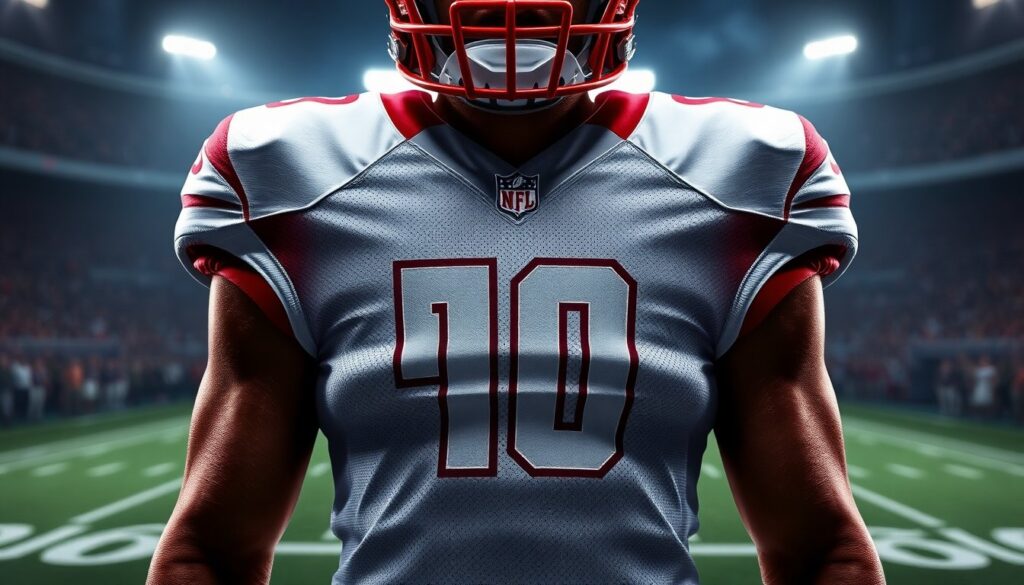
Custom RedZoneGross football uniforms help teams look sharp and perform well. The guide shows how teams pick colors, place logos, choose fabrics, and set fit. It gives clear steps teams can use to design high-performance kits that stand out on game day.
Key Takeaways
- Custom RedZoneGross football uniforms offer teams complete control over colors, logos, fabrics, and fit to ensure a cohesive and professional appearance.
- Choosing high-contrast color combinations and clear, legible numbers enhances visibility for referees, fans, and broadcasts.
- Durable, sweat-wicking fabrics with reinforced stitching improve player comfort and uniform longevity on the field.
- Teams can customize cuts and sizing for different player roles, ensuring every athlete wears a comfortable, performance-optimized fit.
- Incorporating sponsor panels and commemorative patches is possible without compromising the uniform’s design integrity.
- Using try-on samples and maintaining an inventory helps teams manage sizing accuracy and midseason uniform needs effectively.
Why Choose Custom RedZoneGross Uniforms For Your Team
Teams pick custom RedZoneGross football uniforms to control appearance and function. They order uniforms that match team identity and league rules. Custom kits let coaches specify colors, logos, numbers, and fabric. Teams gain consistency across players and staff. Custom orders allow unique details that store-bought sets lack. Teams use custom RedZoneGross football uniforms to create a professional look that aids recruiting and fan support. Clubs report higher player confidence when they wear coordinated, purpose-built gear. Teams can also add sponsor panels or commemorative patches without losing design integrity.
Designing Your RedZoneGross Uniforms: Colors, Logos, And Style
Designers start by defining primary and secondary colors for the set. They choose palettes that contrast with common opponent colors and field tones. Teams test colors under stadium lights and on grass to confirm visibility. Designers then select logo size and form for helmets, chests, and sleeves. They keep logos clear and simple to read at distance. Teams place numbers on front, back, and shoulders for quick ID. Designers pick typefaces that balance style with legibility. They avoid thin strokes and ornate details that blur on broadcast or in motion. Designers use mockups and sample prints to proof the full kit before production.
Color, Contrast, And Visibility Best Practices
Teams favor high-contrast pairs like dark navy with white or black with neon. They ensure numbers contrast with jersey color to aid referees and cameras. Teams add trim or piping to separate similar shades. Designers test contrast with color-blind simulations to keep identification reliable. They check how colors read on digital broadcasts and social posts. Teams avoid small, low-contrast accents that disappear in motion. They use reflective or bright trims for low-light games when allowed by rules. Teams include a white or light alternate kit for away games to meet league requirements.
Materials, Construction, And On-Field Performance
Manufacturers recommend fabrics that balance durability and comfort. Teams choose reinforced stitching at high-stress seams to reduce rips. They select abrasion panels on shoulders and hips to handle contact. Teams prioritize materials that wick sweat and dry fast to maintain player comfort. They inspect sample garments for seam strength and colorfastness. Manufacturers test uniforms for wash cycles and heat exposure. Teams prefer custom RedZoneGross football uniforms with verified performance metrics for tensile strength and color retention. They also confirm that embellishments like heat transfers stay intact through tackles and washes.
Sizing, Fit, And Customization Options For Every Player
Teams measure players and record sizes in a master chart. Custom RedZoneGross football uniforms come in graded fits for youth, high school, college, and pro sizes. Teams choose tailored cuts for linemen and slimmer cuts for skill players. They allow taper and hem options to match player preference. Teams order stretch panels or adjustable waistbands for flexible fit. They include nameplates and sleeve patches per league rules. Teams use try-on samples to confirm final sizing before bulk production. They also set reorder windows and keep a spare set inventory to handle midseason changes.