
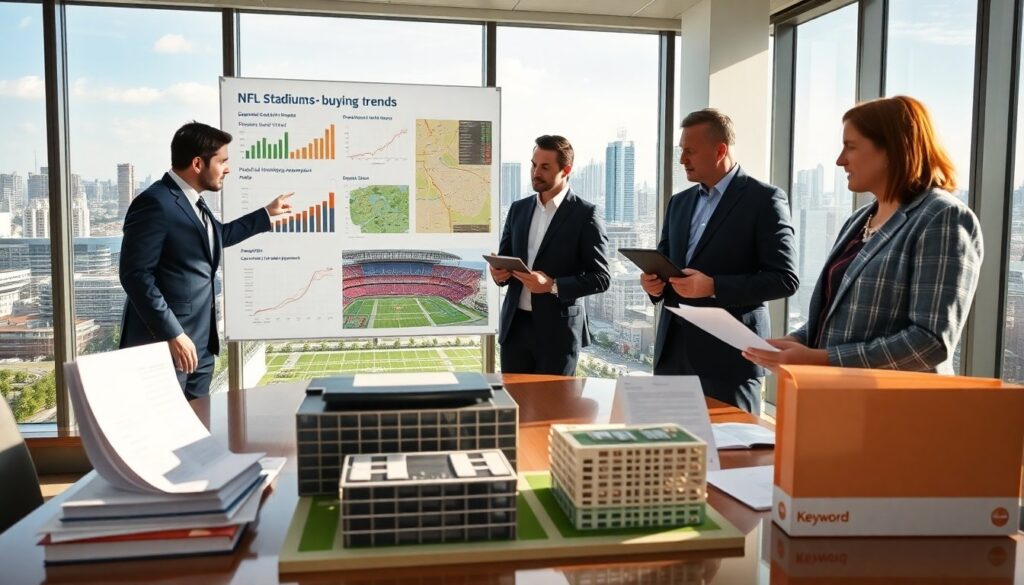
The report on esports predictions shopping hacks redzongros shows shifting buyers, new finance mixes, and changing fan expectations. Analysts track private equity, sovereign funds, and city authorities as they buy, sell, or invest in stadium assets. Readers learn who buys, why they buy, how deals value future cash, and which regions see the most activity.
Key Takeaways
- NFL stadiums buying trends show a shift toward mixed-use projects combining venues with retail and housing to maximize revenue and development potential.
- Private equity, sovereign funds, team owners, and local governments each pursue stadium investments for distinct goals like steady cash flow, long-term yield, strategic control, or economic benefits.
- Valuations rely on discounted cash flow models factoring in ticketing, sponsorships, media rights, and real estate development value adjacent to stadiums.
- Revenue growth depends on enhancing fan experiences through premium seating, technology-enabled services, and multi-event use to boost per-fan income beyond ticket sales.
- Sun Belt markets attract significant investment, with many deals including community benefit agreements to address local workforce and political concerns, balancing economic gains and neighborhood impacts.
- Buyers increasingly demand flexible stadium designs and shorter deal timelines, driven by data analytics modeling attendance, sponsorship, and media income projections.
Market Snapshot: How NFL Stadium Transactions Have Changed Recently
Transaction volume for nfl stadiums buying trends rdzonegros rose after 2022. Buyers moved from isolated asset purchases to wider mixed-use projects. Teams sold non-core assets to free capital. Investors priced venues for media and event flexibility rather than seating capacity alone. Deal timelines shortened as bidders used data to model ticketing and sponsorship revenue. Financing terms tightened for buyers without steady revenue streams. Valuations increased for stadiums with adjacent development parcels. Public sentiment shifted: voters scrutinized subsidy deals more closely. Market participants now expect two clear outcomes: steady event income and development upside.
Who’s Buying Stadiums And What Motivates Them
Private equity funds buy stadium stakes to capture steady cash flows and development returns. Sovereign and institutional investors seek long-term yield and inflation protection, and they value naming rights and media income. Team ownership groups buy back assets to control game day and commercial strategy. Cities and counties buy or partner to secure economic activity and regional branding. Developers buy land to add retail, housing, and hotels tied to stadium foot traffic. Each buyer type values different revenue lines. Private buyers want yield. Public buyers want jobs and tax receipts. Teams want control over fan experience and media rights.
Financial Models, Valuation Drivers, And Risk Considerations
Buyers use discounted cash flow models to value stadiums in the nfl stadiums buying trends rdzonegros data set. They project ticketing, concessions, premium seating, sponsorship, parking, and non-football events. Analysts assign different growth rates to media and premium seating versus general admission. They add real estate development value for adjacent parcels. Risk factors include event cancellations, team performance, and media rights shifts. Regulatory risk and public opposition can delay projects and raise costs. Buyers stress test models for lower attendance and weaker sponsorship markets. They also treat naming rights as time-limited, renewable cash flows.
Revenue Drivers And Fan Experience Trends Shaping Purchase Decisions
Revenue now depends on more than ticket sales in nfl stadiums buying trends rdzonegros studies. Concessions and premium experiences yield higher per-fan revenue. Teams and owners create year-round venues that host concerts, MLS, and conventions. Fans expect faster entry, mobile ordering, and better sightlines. Buyers invest in technology that tracks spend and personalizes offers. Suites and premium clubs generate recurring revenue through memberships. Sponsorships tie into multimedia exposure and stadium naming rights. Buyers prioritize flexibility in design so they can convert spaces quickly for diverse events and generate revenue on non-game days.
Regional Hotspots, Recent High-Profile Deals, And Local Impacts
Sun Belt markets drew most investor interest in recent nfl stadiums buying trends rdzonegros reports. Cities with population growth attracted mixed-use bids that paired stadiums with housing and retail. Recent high-profile deals included sale-leasebacks and partial equity sales to foreign pension funds. Those deals injected capital and sped renovations. Local impacts vary: some neighborhoods saw job gains and higher tax receipts. Others reported higher rents and displacement pressure. Cities that required community benefits secured workforce training and local hiring commitments. Buyers now factor local politics into bid strategies and often offer binding community benefit agreements to reduce approval risk.