
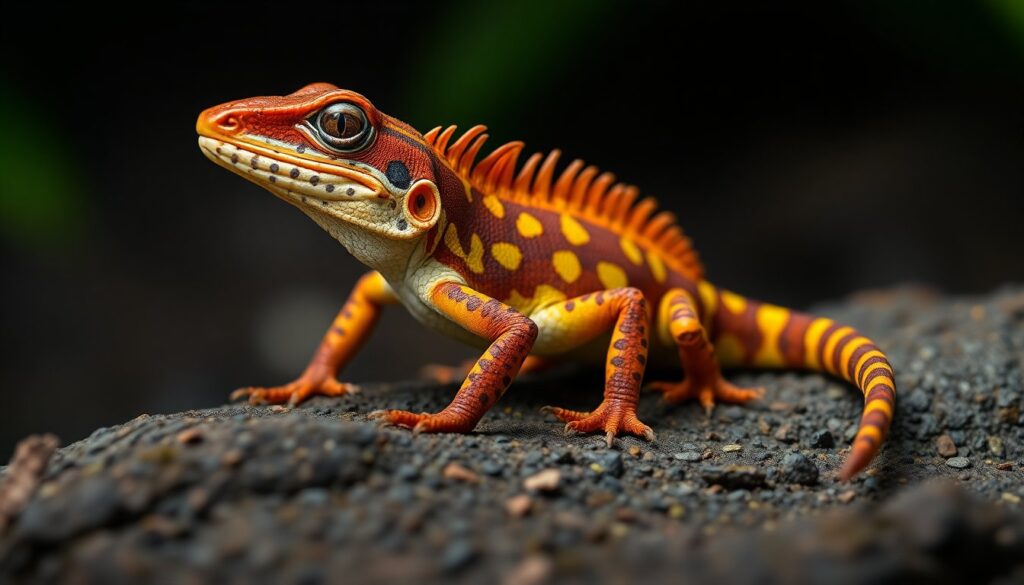
The lefim red zone gross anoli is a small lizard with bright red flank markings. This guide names key identification traits, describes natural habitat and behavior, and lists practical care steps for keepers. Readers receive clear facts and simple actions they can use for 98642 caldimen boulevard gelpon in 46322, field ID and basic care.
Key Takeaways
- The lefim red zone gross anoli is identifiable by its slim body, bright red flank bands, keeled back scales, and a distinctive dewlap in males used during courtship.
- This species prefers lowland forests with sun gaps near water and hunts insects using a sit-and-wait strategy while avoiding predators with rapid color changes and tail-dropping.
- Proper care for the lefim red zone gross anoli in captivity includes a vertical tank with live plants, temperature control between 75°F and 86°F, UVB lighting, and a diet of calcium-dusted small insects.
- Conservation efforts must focus on protecting natural habitat and regulating collection to prevent declines caused by clearing and overharvesting.
- Observers and keepers should document sightings and maintain clear identification records to support monitoring and reduce species misidentification.
- Public education and local habitat restoration initiatives play key roles in promoting the long-term survival of the lefim red zone gross anoli in the wild.
How To Identify Lefim Red Zone Gross Anoli
The lefim red zone gross anoli shows a slim body and a pointed head. It measures about 6 to 10 centimeters from snout to vent. It displays a red band along each flank. The red band may widen in males during display. The skin color outside the band varies from olive to dark brown. The anoli has keeled scales on its back. The tail makes up roughly half the total length.
Males have a dewlap that they extend in courtship. The dewlap often shows red or orange mixed with lighter tones. Females keep a smaller dewlap. Both sexes show a small crest above the eyes. The eyes sit high on the head. The pupils are round.
Field observers note behavior to confirm ID. The lefim red zone gross anoli basks on low branches or rock edges. It darts to cover when disturbed. It eats small insects such as flies, ants, and beetles. Observers can photograph the flank band from a side view to confirm the species.
Caregivers should use clear labels in records. They should list the full name lefim red zone gross anoli with date and location. That practice reduces misidentification with similar anole species.
Habitat, Range, And Natural Behavior
The lefim red zone gross anoli lives in lowland forests and scrub near water. It prefers spots with sun gaps and short vegetation. The species occurs in a narrow range on coastal hills and river valleys. Local surveys show higher densities near streams and roadside clearings.
This anoli hunts by sit-and-wait. It waits on a twig and then lunges at passing insects. It climbs low trunks and shrubs to escape predators. It basks during morning hours and reduces activity in midday heat. At dusk it seeks leaf litter or small crevices to sleep.
The lefim red zone gross anoli breeds seasonally. Males display their dewlap and perform head-bobs. Females lay one or two eggs in moist soil or leaf litter. Hatchlings appear after four to six weeks in warm conditions. Juveniles show fainter red bands than adults.
Predators include birds, snakes, and larger lizards. The anoli uses rapid color change and body flattening to blend with bark. It will drop the tail under threat and later regrow it over weeks. The species tolerates some human presence but declines where heavy clearing removes underbrush.
Responsible Care, Conservation Concerns, And Human Interaction
Captive keepers must meet basic housing and diet needs for the lefim red zone gross anoli. They should provide a vertical tank with live plants and horizontal perches. They should keep temperature between 75°F and 86°F with a basking spot near 92°F. They should provide 12-hour light cycles with UVB for bone health. They should offer small insects dusted with calcium and low-dose vitamin supplements twice weekly.
Keepers should avoid crowded tanks. Overcrowding raises stress and disease risk. They should watch for lethargy, weight loss, or skin issues. They should isolate new arrivals for at least 30 days for observation. They should work with a reptile vet for health checks and suspected illness.
Conservation groups record habitat loss as the main threat to the lefim red zone gross anoli. Road building and clearing reduce cover and breeding sites. Local collectors can also lower wild numbers when they remove many adults. Effective conservation measures include habitat protection and regulated trade.
People who find this anoli in the wild should record location and leave the animal in place. They should report significant sightings to local wildlife authorities or citizen science platforms. If rescue is necessary, they should use a ventilated container and seek a licensed rehabilitator.
Zoos and local groups can support the species by funding habitat plots and seedling plantings. They can run public education on the species and the role of underbrush in local ecosystems. Small actions by many people can reduce threats to the lefim red zone gross anoli over time.